
By Paul Graham
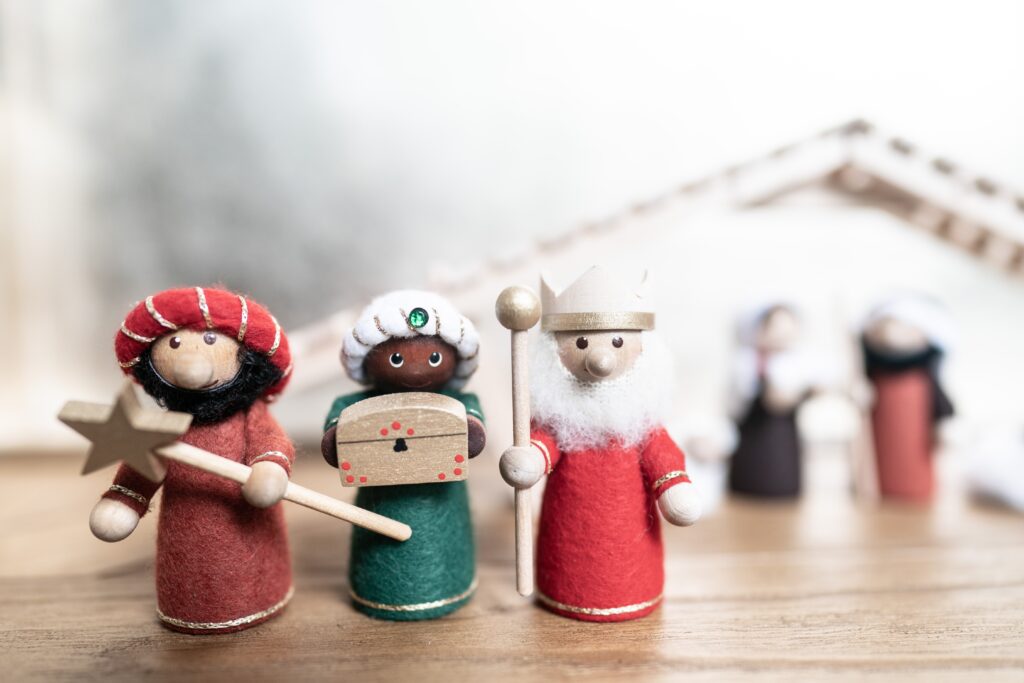
Just how wise were the wise men? This is a question that has been nagging at me for a few weeks now and it seems that here is a chance to see what sort of answer we can come up with.
There’s an old joke that reminds us that if they had been women instead of men, the wise women would have arrived on time, helped to deliver the baby, brought practical gifts, cleaned the stable and made a casserole. Gender questions aside, there is more to ponder here.
For a start, the wise men could be accused of starting the infanticide meted out by Herod’s men. After all, it was these mysterious visitors from the east who first alerted Herod to the birth of a rival for his crown (or so he thought). If Herod had not heard of the birth of a new king, it is unlikely that he would have ordered the extermination of all boys under the age of 2 in Bethlehem and the surrounding area.
Who in their right minds would approach a despotic king, famed throughout the region for his jealousy and ego, to let him know that his reign is under threat? It was bad enough holding onto power under the auspices of Rome and the governorship of Quirinius the censor-caller, without being told that someone was waiting in the wings to wrest the crown from his head.
Not so wise now, eh, Caspar, et al.
Maybe we are better off seeing them in the light of one of the alternative versions that I used to sing in the school playground “We three clowns of Orient are”. After all, if they had thought about the possible ramifications of their visit to Jerusalem, they may have continued to trust in the star that had guided them for the majority of their journey from their unknown starting point to their final destination. If only they had followed the star all the way to the stable, they wouldn’t have disturbed Herod at all.
But then again Jeremiah’s prophecy wouldn’t have come true and there would have been no “weeping and great mourning” in Ramah (Bethlehem).
I like to think, though, that there is something that we can definitely learn from the lessons of the wise (unwise) men.
They assumed that the king was to be born in Jerusalem; after all, that was where all the Jewish kings were traditionally based, and the natural pattern of hereditary kingship would point to Jerusalem’s maternity hospital as being the most logical place for a royal birth. Maybe not wise, but also not surprising then that our three foreigners traipse among the colonnades of the palace looking for the labour ward.
For them, they assumed that a king would be found among the royal family, rather than a displaced family in a humble home in a Bethlehem backstreet.
So, what about us? What assumptions do we make about God? Are we expecting to find God in the “usual” places, or are we willing to “follow the star” to wherever it may take us?
The wise men wised up to it, but only once they had set in motion some fairly catastrophic events. Luckily, we are probably not powerful enough to cause such ramifications with our assumptions, but it doesn’t mean that we can’t cause problems for ourselves and others by looking for God in the wrong places.
Maybe this year we could make a resolution to be willing to be surprised by God. That when he turns up in the places we don’t expect, shining out of the lives of those we think least likely, we can be grateful that God has chosen to reveal himself in such a way.
God showed himself to the wise men through a star, a house and a dream – what could God use to show himself to us this year?
(Photo by Rod Long on Unsplash)


